Shoja: Where the Hills Whisper Slowly and the Snow Lingers Just a Little Longer
12 Apr 2025•4 min read
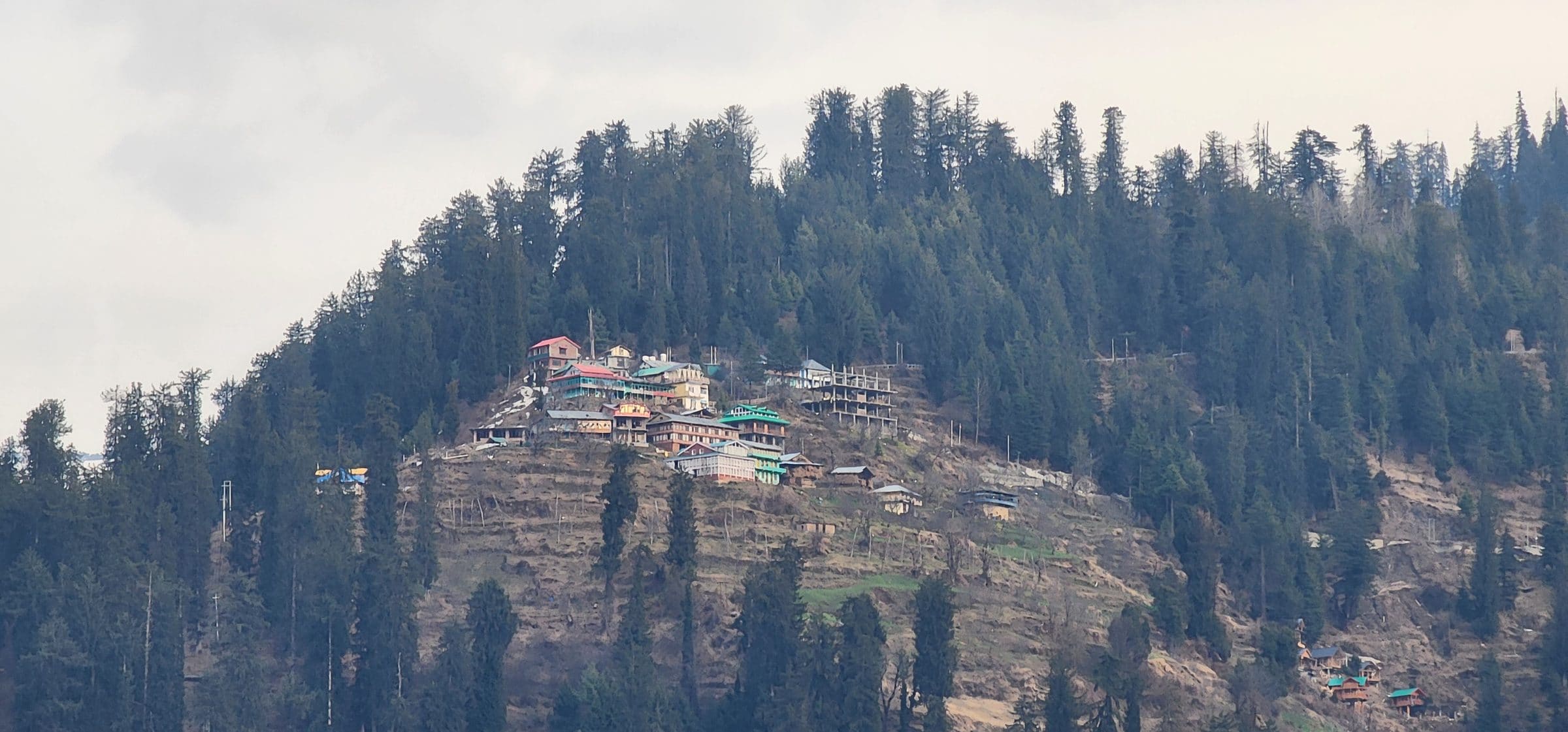
Shoja guide: best time to visit, cafes, snow season & Jibhi trip tips. Discover Shoja in April, Jalori Pass access, and serene mountain living.
Share this guide
Where is Shoja?
Tucked at the base of Jalori Pass in the Kullu Valley of Himachal Pradesh, Shoja is a quiet mountain village perched at 2700 meters—higher than Jibhi, deeper in the hills, and wrapped in the stillness of deodar forests. It lies just 16 km from Jibhi, along the winding NH305 that climbs through Banjar Valley. While Jibhi and Shoja share the same soul—rooted in apple orchards, wooden homes, and the unhurried rhythm of “Ailyak”—Shoja feels like the quieter cousin, a place where time slows further and the air grows crisper.
Shoja is more than a stopover; it’s a gateway. From here, the final ascent to Jalori Pass (3120m) begins—a road that cuts through misty ridges and opens to views of snow-draped peaks on clear days. This is where trekkers begin the journey to Serolsar Lake, and where travelers pause at a roadside dhaba, sipping maggi while watching clouds drift below.
Shoja in April: What to Expect Right Now (April 2026)
As of today, 12 April 2026, Shoja in April is waking up. The last of winter’s snow has melted at lower elevations, but you’ll still spot white caps on distant ridges. Apple trees are in full bloom across Jibhi and Shoja—soft pinks and whites painting the valley. The weather is mild: mornings are cool, days reach a pleasant 18–20°C, and evenings call for a light jacket. It’s one of the loveliest times to visit—fewer crowds, fresh greenery, and perfect trekking conditions.
This is also the month when the road to Jalori Pass typically reopens, usually by early April, depending on snow clearance. While the pass itself may still have snow patches, the journey from Shoja is often clear by now, especially on sunny days.
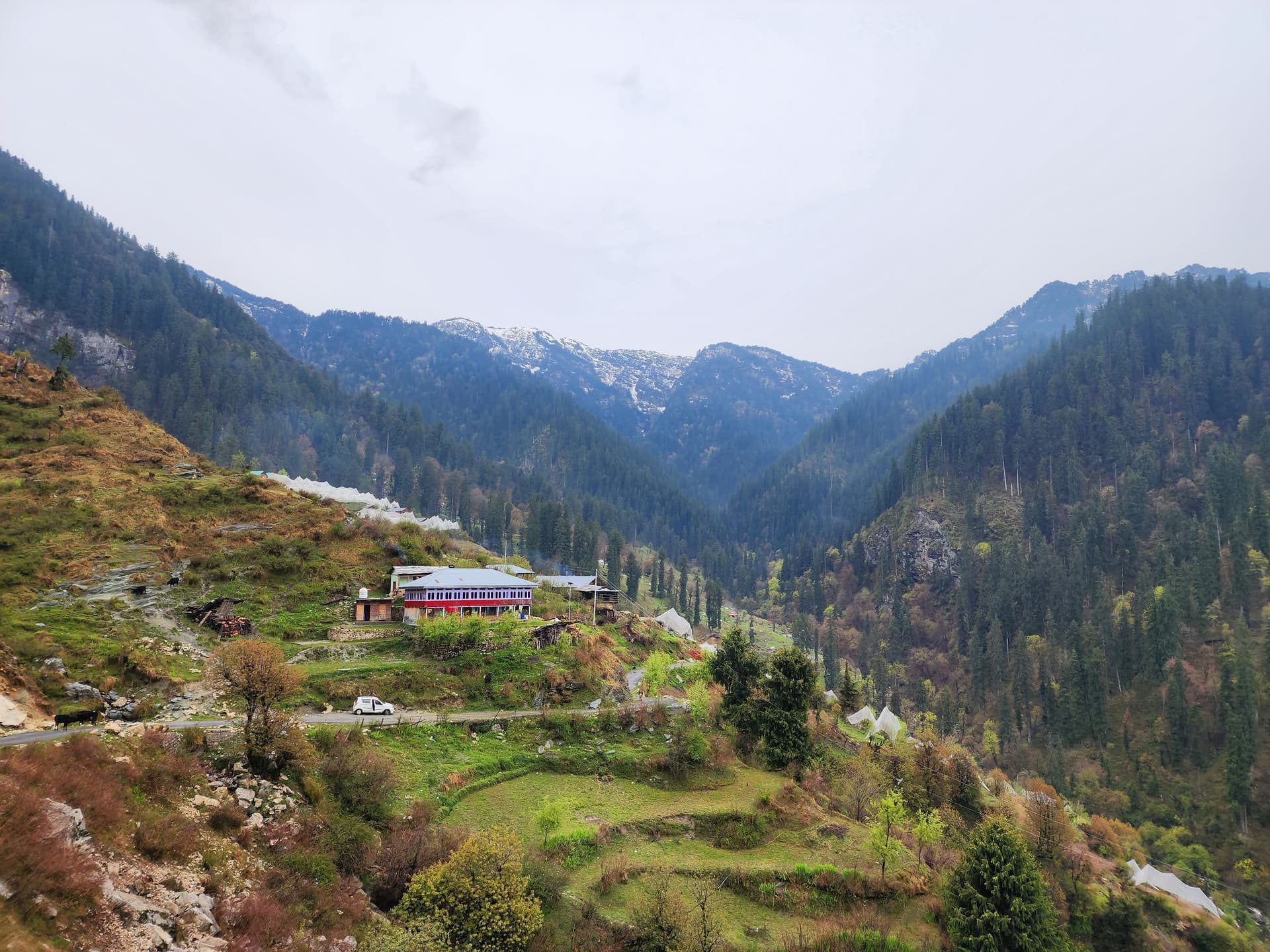
Rolling green hills and dense forests in a mountainous valley landscape
Jibhi Shoja: A Perfect Mountain Pairing
The Jibhi Shoja combo is one of Himachal’s best-kept secrets. Stay in Jibhi for its cozy homestays, trout fishing, and easy access to Chehni Kothi. Then head to Shoja for higher altitude views, a quieter vibe, and a base for Jalori Pass adventures. Together, they offer the full spectrum of mountain life—culture, nature, adventure, and stillness.
Travelers often ask for a Jibhi Shoja trip package or Jibhi Shoja package—a curated stay that moves between both. While there are no official “trip packages” sold online, many guests book stays in both villages through experience-led homestays that plan daily excursions.
Cafes in Shoja: Simple, Scenic, and Soulful
Looking for cafes in Shoja? Shoja is also known for it's cafe hopping culture: from cafes serving amazing food, local dhabas & cosy cafes full of Instagrammable corners Shoja has it all.If you want to experience the himachali culture you will find here simple dhabas and family-run eateries serving hot tea, maggi, and parathas with mountain views. The charm lies in the authenticity—eating warm food at a wooden table while listening to the wind in the pines.
For a more curated experience, many travelers head back to the Ailyak Café—a tranquil “third space” serving nourishing meals in a mindful setting. It’s part of Ailyak Stays & Experiences, which offers stays in Shoja, and Seri(Jibhi) blending comfort with the local rhythm of Ailyak. Their riverside picnics, forest bathing walks, and bonfire evenings are among the most sought-after unique Shoja cultural experiences.
When Will It Snow in Shoja? Is It Snowing in Shoja Now?
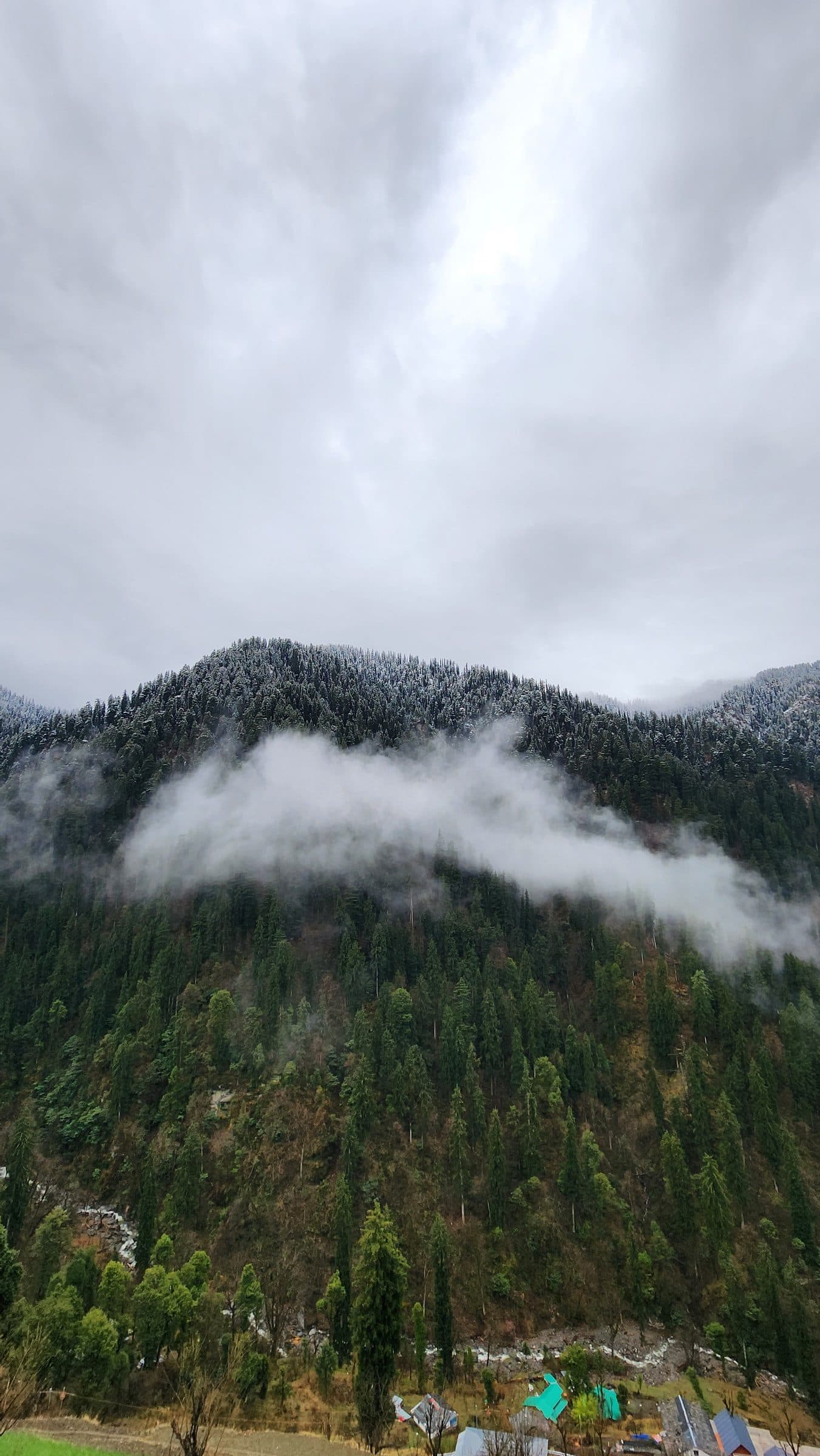
Dense green forest and mountains shrouded in heavy morning fog.
Is it snowing in Shoja? Not right now. As of mid-April 2026, Shoja is free of fresh snow. The winter season ended in March, and the village is in its spring transition.
But when will it snow in Shoja? The next snowfall won’t come until late December or early January. Shoja sees consistent snow from December to February, with January often the heaviest. During this time, the village transforms into a snow globe—wooden homes dusted white, children sledding down lanes, and the sound of silence deepening. The road remains open to Shoja, but the Jalori Pass road closes due to snow.
Winter visitors come for the snow experience, not the trekking. And if you’re dreaming of crunching through fresh powder, plan for December–February. For now, April offers green slopes and blooming orchards—not snow, but something just as magical.
Plan Your Jibhi Shoja Trip
Whether you're searching for shoja trip package, jibhi shoja trip, or just wondering where is Shoja, the answer is the same: it’s a hidden gem in the Tirthan Valley, best explored slowly. Come for the views, stay for the stillness.
For those ready to live the ailyak way—where mornings begin with tea on a wooden porch and evenings end under starlit skies—Ailyak Stays & Experiences offers the most authentic connection to the land and culture of Jibhi and Shoja.
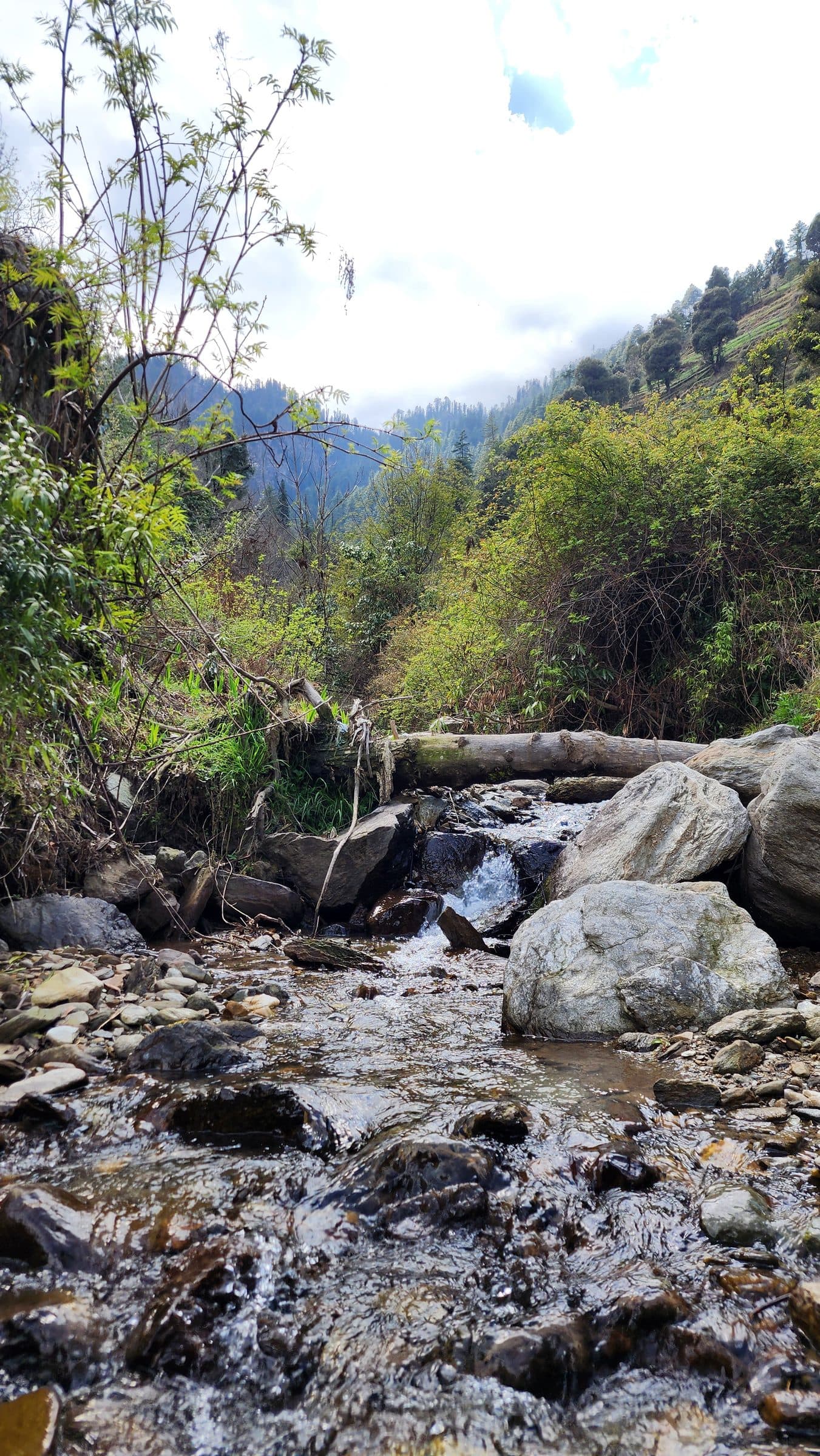
Clear stream flowing over rocks surrounded by vibrant green vegetation and trees, Near Ailyak Seri
Explore more hidden Himalayan gems like offbeat trekking trails in Tirthan Valley for weekend adventures. If you're planning a longer stay, learn how to reach Jibhi by train or road for the smoothest journey.
Jibhi Trip Essentials
For planning routes, timing, and live conditions, use the core Jibhi guides:
How to Plan a Visit to Shoja from Jibhi
A simple guide to traveling from Jibhi to Shoja and making the most of your mountain experience.
Total Time: 1 hour
1
Travel from Jibhi to Shoja
Drive or hire a vehicle to cover the 16 km distance along NH305, enjoying the scenic route through Banjar Valley and deodar forests.
2
Explore Shoja Village
Spend time walking through apple orchards, observe traditional wooden homes, and soak in the peaceful atmosphere unique to this high-altitude village.
3
Prepare for Jalori Pass
Use Shoja as a base to begin your ascent to Jalori Pass (3120m), checking road conditions and weather, especially if traveling in early spring.
4
Visit Serolsar Lake
Start the trek to Serolsar Lake from near Jalori Pass, a scenic hike through misty trails ideal in April when the weather is mild and clear.
Frequently Asked Questions
Shoja is a mountain village in the Kullu Valley of Himachal Pradesh, situated at the base of Jalori Pass and 16 km from Jibhi. It lies at an altitude of 2700 meters along the NH305 highway, surrounded by deodar forests and apple orchards.
One of the loveliest times to visit Shoja is in April, when apple trees are in bloom, the weather is mild (18–20°C during the day), and trekking conditions are ideal. The village is also less crowded during this spring period.
No, as of mid-April 2026, Shoja is not experiencing snowfall. The winter season has ended, and the area is transitioning into spring with melting snow at lower elevations.
Shoja typically receives snow from December to February, with January often seeing the heaviest snowfall. The next snowfall is expected in late November or early December 2026.
Yes, the road to Jalori Pass usually reopens by late April, depending on snow clearance. As of mid-April 2026, the route from Shoja is often clear, especially on sunny days, though snow patches may remain on the pass.
Shoja is located 16 km from Jibhi along the winding NH305 highway. It is situated at a higher altitude than Jibhi and is surrounded by deeper hills and dense deodar forests.
Related reads
- Shoja Uncovered: Where Mountain Stillness Meets Warmth in a Cup
Discover the best cafes in Shoja, snow updates, and unique cultural experiences. Plan your Jibhi Shoja trip with soulful stays and slow travel in 2026.
- Escape the Snow, Find the Stillness: Your Shoja Trip Package for June 2026
Shoja trip package guide for 2026—discover when it snows, best cafes in shoja, and unique cultural experiences. Plan your jibhi shoja trip with Ailyak.
- Shoja Uncovered: Where the Himalayas Whisper and Time Slows to a Hush
Discover Shoja: serene Himalayan village near Jibhi. Find travel tips, snow season dates, cultural experiences, and peaceful stays for 2026.
- The Quiet Magic of Shoja: A Mountain Pause Above the Clouds
Find the best Cafés in Shoja, experience ailyak living, and plan your Jibhi-Shoja trip with seasonal tips, snow updates, and cultural stays.
- Shoja Uncovered: Where the Mountains Whisper and Time Slows to a Hush
Discover the best cafes in Shoja, Jibhi & Shoja trip tips, snow updates, and cultural experiences. Your 2026 guide to slow mountain living in Himachal.
- Where the Mountains Whisper: A Quiet Journey Through Shoja and the Soul of Jibhi Valley
Cafe in Shoja? Discover the quiet charm of Shoja village, April travel tips, and where to find warmth between Jibhi and Jalori Pass.
Stay Updated
Subscribe to our newsletter for travel tips and updates about Jibhi.