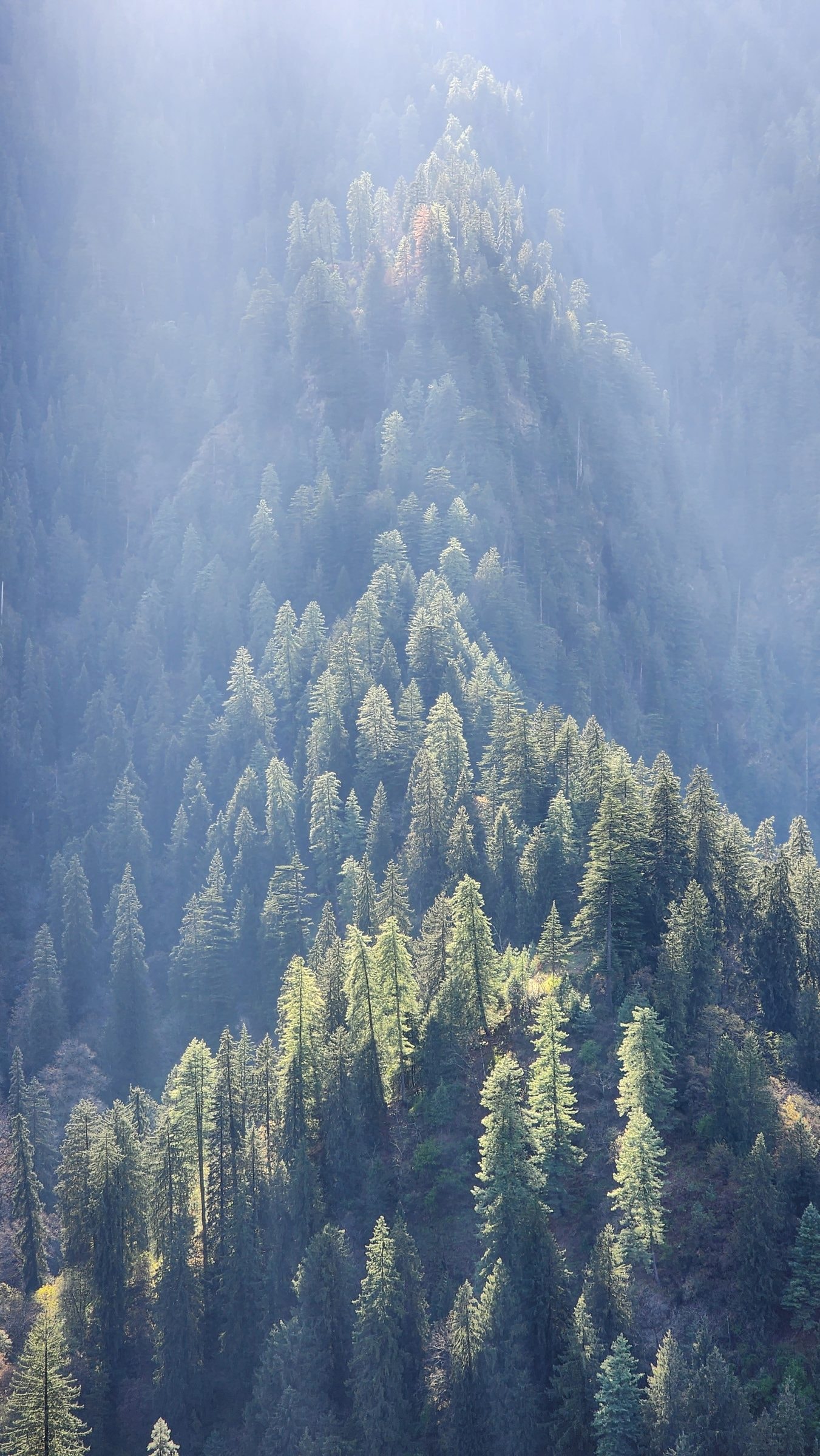
Forest Bathing in Jibhi and Shoja: A Slow Walk Among the Cedars
Forest bathing, or shinrin-yoku, is the practice of walking slowly and doing nothing in particular among old cedar and pine. Around Jibhi, Shoja and Seri, sessions run one to two hours, self-guided or led by facilitators who grew up in these forests. No summit, no distance, no rush.
Difficulty
Easy
Duration
1 to 2 hours
Best Season
Spring, Summer, Autumn
Forest Bathing in Jibhi: the walk that is not a trek
Most things you can do in this valley ask something of you. A trek asks for your legs, a pass asks for an early start, a waterfall asks you to scramble. Forest bathing asks for nothing except that you slow down.
It comes from the Japanese practice of shinrin-yoku, which translates roughly as taking in the forest atmosphere. It began in Japan in the 1980s as a form of nature therapy, and the idea is almost stubbornly simple: walk gently, pause often, and let the forest do the work. There is no summit. There is no distance to cover. If you finish faster than you started, you have missed it.
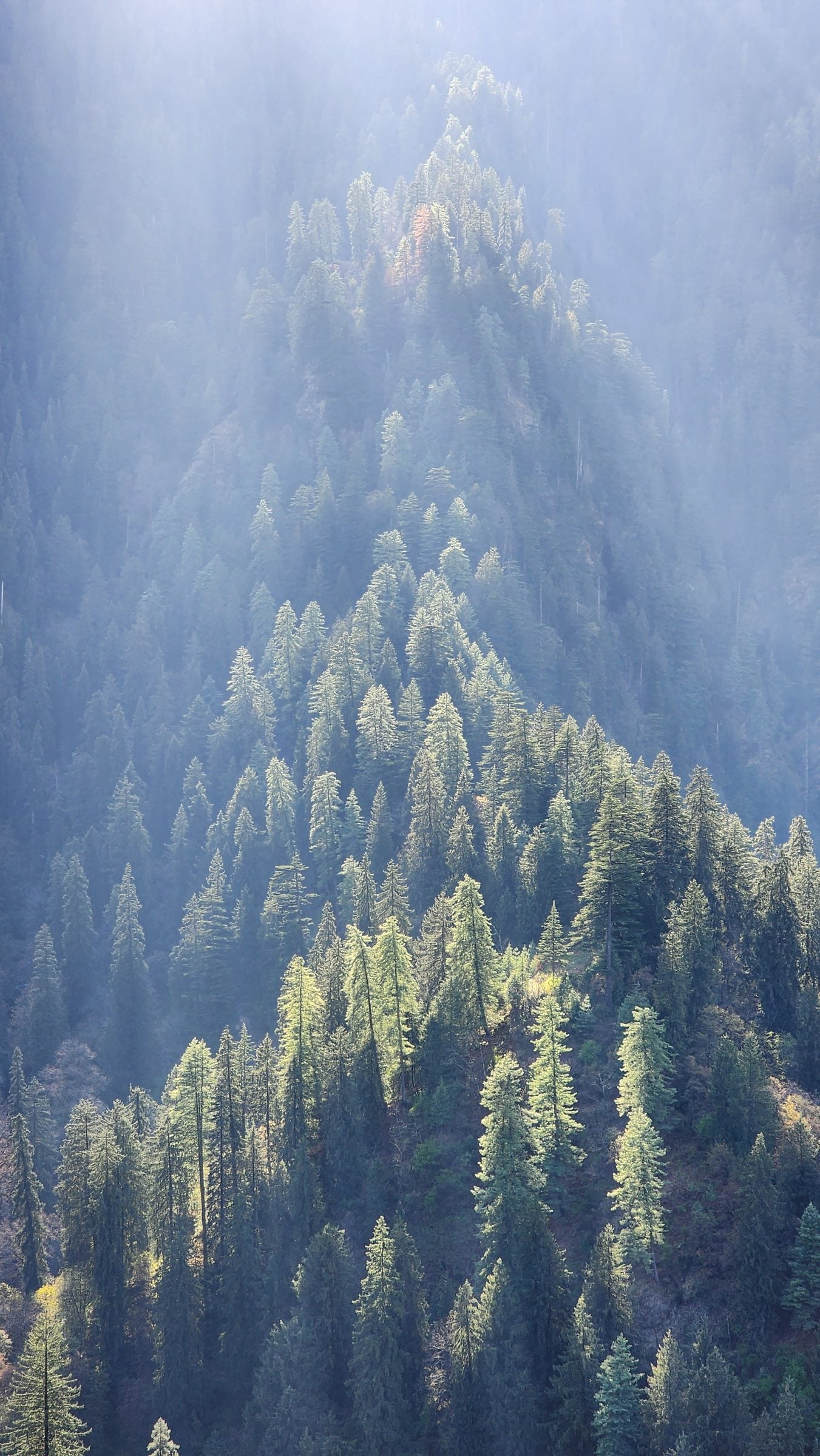
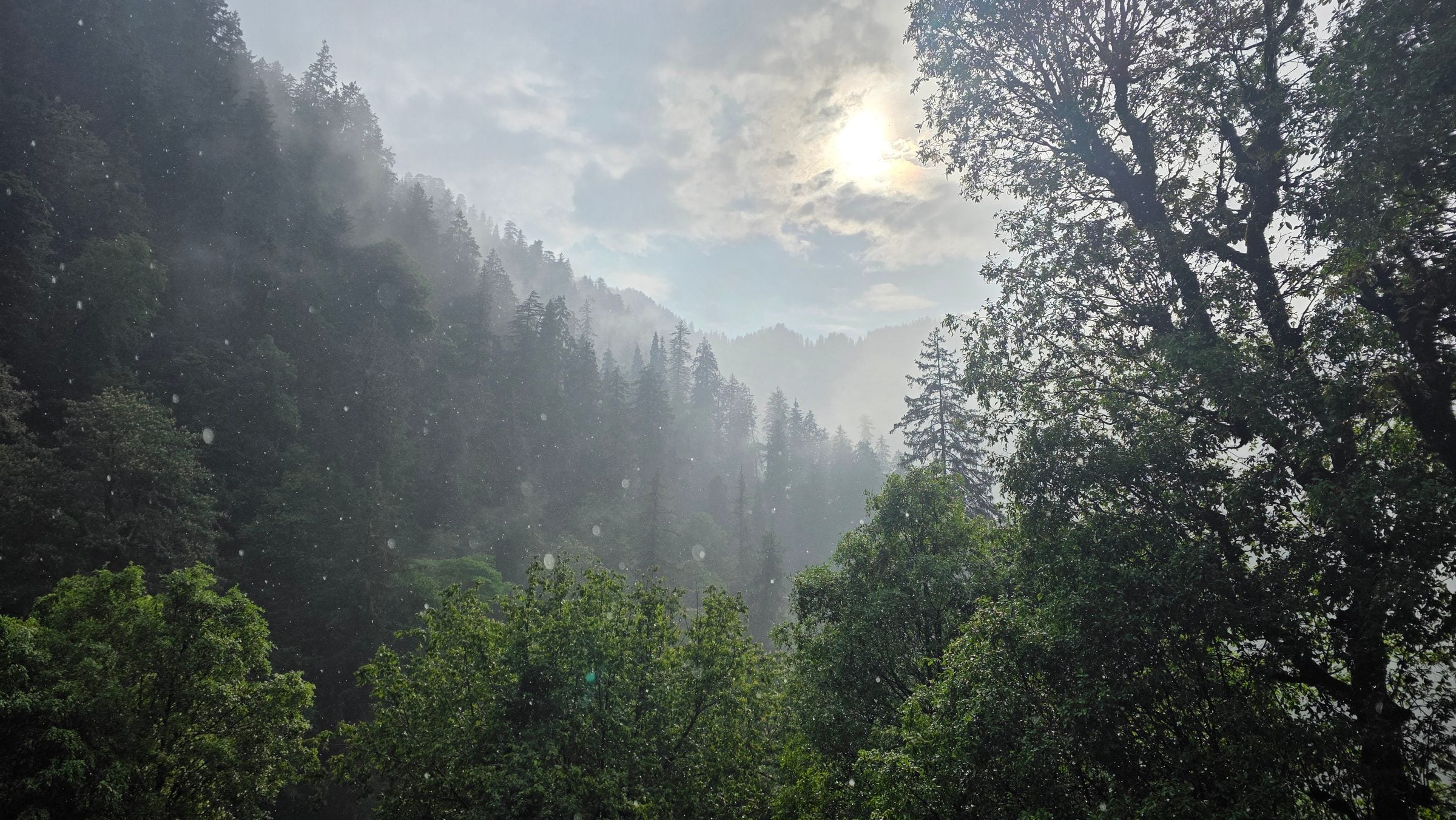
Around Jibhi, Shoja and Seri, the raw material is already here. Old cedar and pine, moss on the boulders, the river audible somewhere below the trail, and light coming down through the canopy in pieces. The Japanese have a word for that last one too, komorebi, sunlight filtered through leaves.
What a session actually looks like
A session runs about one to two hours, though the honest answer is that it runs as long as you want it to.
It usually opens with a short breathing exercise, enough to get you out of travel-brain and into the place you are standing in. After that the structure loosens. You walk slowly. You stop when something asks you to stop. Moss-draped boulders and sunlit clearings are invitations to lie back and watch the canopy move, and taking them is the point rather than a detour from it.
You can do this two ways around Jibhi:
- Self-guided. You walk at your own pace along marked paths, with a guide sheet that prompts you to notice things you would otherwise walk past. Good if you are comfortable with your own company.
- Guided. A facilitator sets the rhythm, holds the pauses, and leads the breathing. Guided walks are arranged in advance. Good if silence makes you fidget, or if you want to be told it is fine to stop walking.
When to come
March to October is the window. Spring through autumn is when the forests around Jibhi carry wildflowers, new growth and full canopy, and when the ground underfoot is kind.
Within the day, early morning or the hour before sunset is where the practice comes alive. The light is low and gold, the birds are working, and the trails are empty of everyone who came here to tick something off.
Monsoon months have their own lushness, and the forest is arguably at its most alive then. Go out under a monsoon sky only when it is actually clear and the trail is safe. A soaked, slippery path is not a meditative one.
Five things that make the difference
- Dress for comfort, not for the photograph. Light, breathable layers you can move in.
- Silence the phone, or leave it behind. This is the single change that decides whether the walk works.
- Walk slower than feels natural. Notice what is underfoot. Let the forest set the pace rather than your watch.
- Live it before you capture it. Take the sight in fully first. The photograph will still be there in five minutes; the moment will not.
- Leave no trace. Carry your litter out. These are working, living forests and, for the people who grew up in them, sacred ground.
Why it lands here
In Himachal, forests have never been only timber and shade. They are places people have gone to for centuries to be restored, to pray, and to be alone in a useful way. Village deities live in groves. Paths through the trees have doubled as meditative space for a very long time.
So forest bathing is not an import being staged for visitors. It is a name, and a light structure, put around something these hills have always been used for.
Doing it the Ailyak way
Ailyak Stays run both self-guided and guided forest bathing at their properties in Shoja and Seri, near Jibhi. The walks are led by people who grew up in these forests and know their rhythms, which is the difference between a walk in the woods and a walk that is actually held.
The easiest way to arrange one is to ask at reception when you arrive, or call ahead on +91 93175 17389. Sessions are set to your energy and the day's weather, so a short mindful loop and a long immersive walk are both real options.
It pairs well with the rest of a slow day: gentle movement in the morning, the forest through the middle of it, and time by the river afterwards while the light goes.
Nearby, if you want more
- Jibhi Waterfall, a short walk that suits the same unhurried pace
- The river walk, which follows the Tirthan rather than climbing away from it
- Places to stay across the valley
Come for the forest. Leave at the speed you arrived at, or slower.
What to Prepare
Key Tips
- •Wear light, breathable layers you can move freely in
- •Put the phone on silent or leave it behind; this decides whether the walk works
- •Walk slower than feels natural and stop often
- •Take the sight in fully before reaching for the camera
- •Carry out everything you carry in; these are living, and locally sacred, forests
- •In monsoon months go out only when the sky is clear and the trail is safe
Gallery
Best Photography Spots
Safety Tips
Available Facilities
Plan Your Jibhi Trip
Use these guides to plan timing, routes, and live conditions before you go.
Ailyak Tip
Frequently Asked Questions about Forest Bathing in Jibhi and Shoja: A Slow Walk Among the Cedars
Jibhi is beautiful year-round, but the best time depends on your interests. Spring (March-May) offers pleasant weather and blooming flowers. Summer (June-August) is perfect for outdoor activities. Autumn (September-November) provides clear mountain views. Winter (December-February) offers snow experiences and cozy stays.
Jibhi is accessible by road from major cities. From Delhi: 500km via NH44 and NH5. From Chandigarh: 270km via NH5. The nearest airport is Bhuntar (Kullu) 60km away. Regular buses and private taxis are available from major cities.
Jibhi offers various accommodation options including homestays, guesthouses, and boutique properties like Ailyak Café & Stays. Homestays provide authentic local experiences, while guesthouses offer modern amenities. Book in advance during peak seasons.
Absolutely! Jibhi is very family-friendly with activities suitable for all ages. Easy nature walks, village tours, cultural experiences, and riverside activities are perfect for families. Many accommodations offer family rooms and child-friendly facilities.
Pack according to the season: comfortable walking shoes, weather-appropriate clothing (layers work best), rain protection, sunscreen, hat, camera, basic first aid kit, and any personal medications. Don't forget to bring a sense of adventure and respect for local culture!
The best time to experience Forest Bathing in Jibhi and Shoja: A Slow Walk Among the Cedars is during Spring, Summer, Autumn. Each season offers unique experiences and different weather conditions.
Forest Bathing in Jibhi and Shoja: A Slow Walk Among the Cedars is rated as Easy. The difficulty level is based on terrain, duration, and physical requirements.
For Forest Bathing in Jibhi and Shoja: A Slow Walk Among the Cedars, you should prepare: .
Reviews & Ratings
No reviews yet. Be the first to review!