Where the Mountains Whisper: Discovering Jibhi Tirthan Valley’s Quiet Magic
4 Jan 2026•4 min read
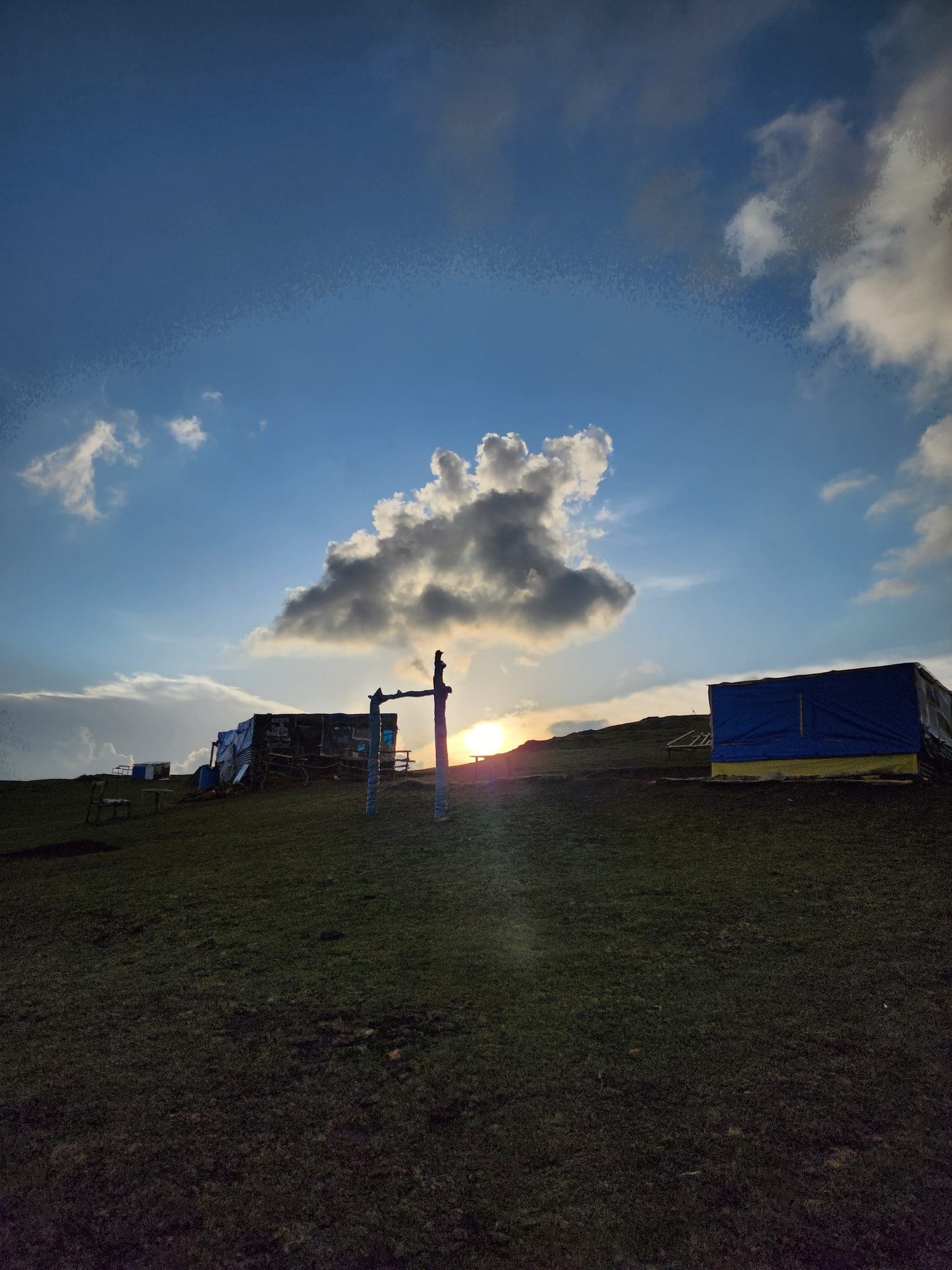
Jibhi Tirthan Valley guide: best places to visit, weather, safety, and how to reach. Discover serene treks, homestays, and the true spirit of ailyak in Himachal Pradesh.
Share this guide
Offbeat Trekking Trails in Jibhi Tirthan Valley
Jibhi Tirthan Valley is Himachal Pradesh’s best-kept secret for those who crave trekking trails that whisper through ancient cedar forests, lead to forgotten towers, and end at lakes where gods are said to bathe. Away from the noise of Manali and Kasol, this 2,250m-high valley rewards walkers with quiet paths, pine-scented air, and vistas that linger in your memory long after the trek ends. Here are five offbeat trekking trails in Jibhi Tirthan Valley that let you walk where few travelers tread.
Why Jibhi Tirthan Valley Is the Offbeat Trekker’s Dream
Jibhi isn’t just another Himachali postcard—it’s a living village where apple orchards blush pink in March, wooden homes creak in the Himalayan breeze, and the local pace of life is called “Ailyak.” Nestled in the buffer zone of the UNESCO-listed Great Himalayan National Park, the valley sits at 2,250m along the emerald Tirthan River. Unlike crowded tourist hubs, Jibhi offers trekking trails that begin where the road ends and end where the clouds begin. Whether you’re dodging apple blossoms in spring or tracking snow leopards’ shadows in winter, Jibhi Tirthan Valley delivers treks that feel like pilgrimages to the mountains themselves.
1. Chehni Kothi Trek: Walk to One of India’s Tallest Traditional Towers
Trailhead: Chainsi Marg road-head (7 km from Jibhi) Distance: 2.5 km round trip (45-minute trek uphill) Elevation gain: 200m Best season: March–June, September–November Why it’s offbeat: Most travelers miss the 9-storey Chehni Kothi, a 500–700-year-old stone-and-wood sentinel built by the Kothi dynasty. The trail winds through terraced apple orchards and oak glades before reaching the tower, where earthquake-resistant wooden beams lock the stones in place. At 2,450m, the views over Tirthan Valley are framed by deodar and pine—pure stillness.
Tip: Pair the trek with a stay at Ailyak Cafe & Stays in Jibhi for a post-hike thukpa and stories from local guides.
2. Serolsar Lake Trek: A Sacred Lake Hidden Above Jalori Pass
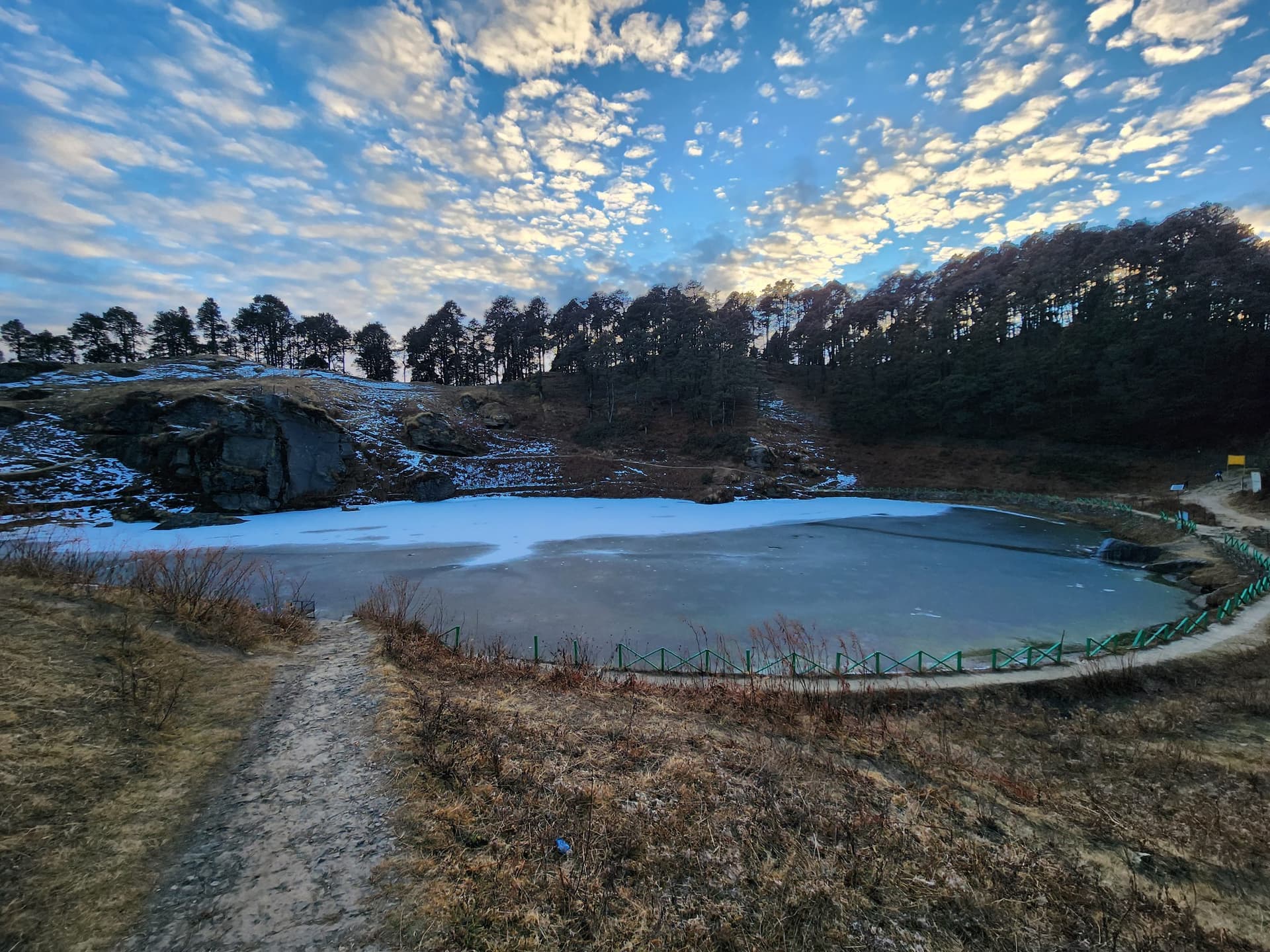
Serolsar Lake bordered by dense pine trees
Trailhead: Jalori Pass top (19 km from Jibhi) Distance: 10 km round trip (5 km one-way trek) Elevation gain: 300m Best season: May–October (pass open May–October) Why it’s offbeat: While Jalori Pass sees crowds, Serolsar Lake remains a sacred secret. The 5 km forest trek from Jalori Pass winds through dense deodar and oak, where Himalayan Monals flash crimson and Koklass Pheasants call from the canopy. At 3,100m, the lake cradles a tiny temple to Budhi Nagin, the serpent deity. Few travelers make the effort—you’ll likely have the water to yourself.
Connect: Pair this trek with a visit to Shoja Uncovered for a complete mountain immersion.
3. Raghupur Fort Trek: A Ruined Kingdom with Panoramic Kullu Views
Trailhead: Jalori Pass top (same start as Serolsar Lake) Distance: 12 km round trip (6 km one-way) Elevation gain: 350m Best season: June–September Why it’s offbeat: This 3-hour trek climbs to the crumbling ramparts of Raghupur Fort, a 17th-century stronghold with walls that gaze over the Kullu Valley. The trail is steep but short, rewarding trekkers with 360° views of snow-dusted peaks and the Tirthan River’s emerald ribbon. Unlike famous Himalayan forts, Raghupur sees fewer than a dozen hikers on a good day.
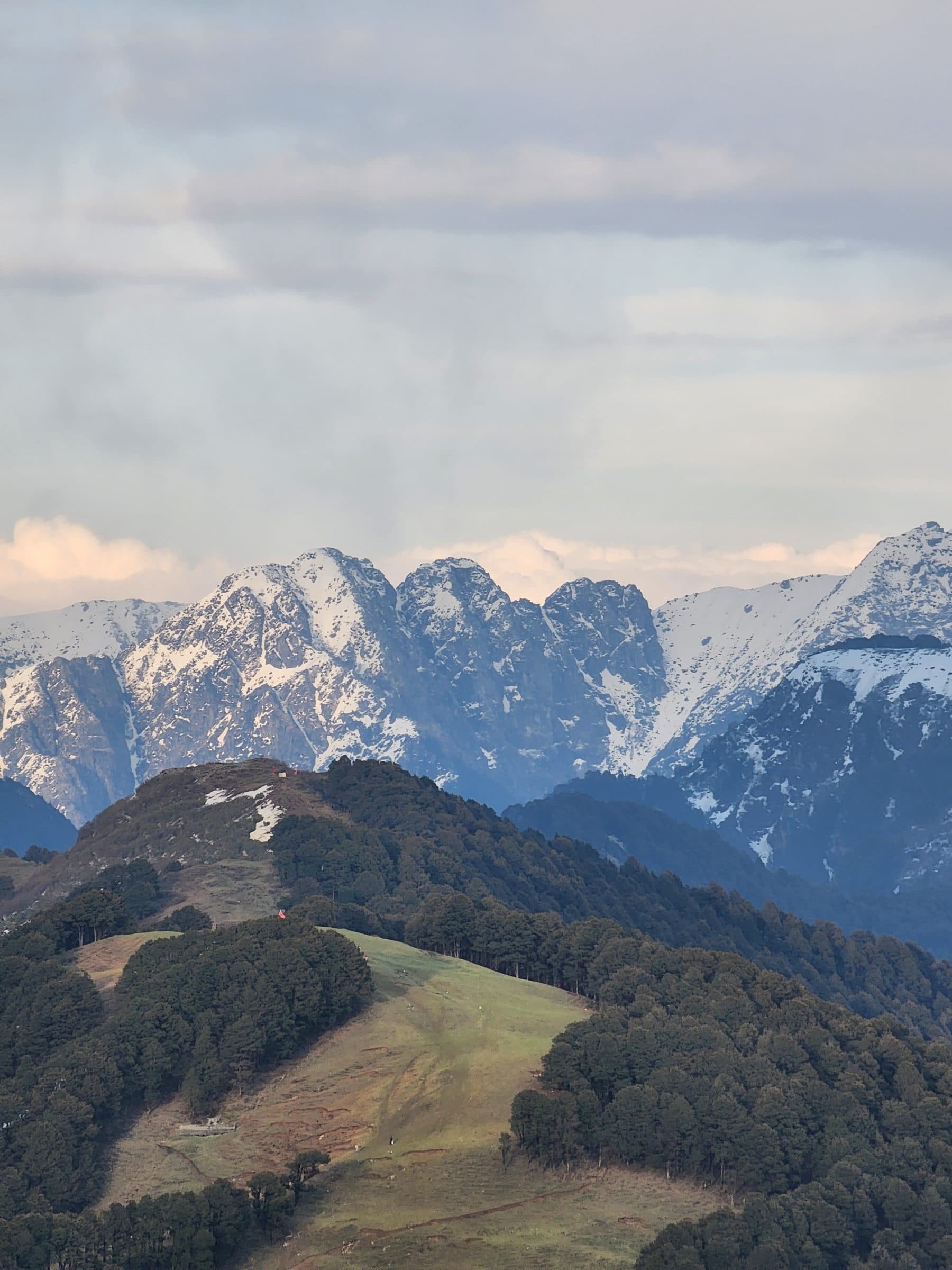
Rolling green forested hills leading up to distant mountains under a misty sky, from Raghupur Fort
4. Tirthan Riverside Forest Walk: A Gentle Trail for Dawn and Dusk
Trailhead: Jibhi village (bridge near Ailyak Cafe & Stays) Distance: 6 km loop Elevation gain: 100m Best season: Year-round (avoid July–August monsoon) Why it’s offbeat: This flat, family-friendly loop hugs the Tirthan River, passing wooden bridges, trout pools, and apple orchards that glow in the morning light. Spot kingfishers diving for fish or pause at riverside dhaba for a cup of butter tea. It’s the perfect counterpoint to steep Himalayan treks—a meditative amble where the only sound is the river and the wind in the pine.
5. Shoja Ridge Trek: A High-Altitude Ridge Walk to the Clouds
Trailhead: Shoja village (15 km from Jibhi) Distance: 8 km out-and-back Elevation gain: 400m Best season: April–June, September–October Why it’s offbeat: Shoja Ridge delivers Himalayan drama without the crowds of Rohtang. The 4 km trek climbs to a grassy ridge where the Kullu Valley unfolds like a map—deodar forests below, snowy peaks above. Keep an eye out for Himalayan tahr and if you’re lucky, a snow leopard’s shadow on the rocks. The ridge also hosts rare orchids; spring blooms carpet the path in purple.
Stay option: Book a room at Shoja Sojourn for a post-trek soak in a wood-fired hot tub.
When to Trek in Jibhi Tirthan Valley
Jibhi’s trekking season aligns with the valley’s moods. March–April brings apple blossoms and mild 15–22°C days—ideal for Chehni Kothi and forest walks. May–June heats up to 25°C but Jalori Pass opens, unlocking Serolsar Lake and Raghupur Fort. July–August is monsoon season; trails can be slippery and the Tirthan swells—best for indoor stays and riverside strolls. September–October delivers golden larches, crisp 10–18°C air, and clear skies perfect for ridge treks. November–February sees snow at higher altitudes; Jalori Pass closes but Jibhi village welcomes snow trekkers with frosted orchards and quiet trails.
Weather tip: Check Jibhi weather today before you pack—monsoon downpours can turn trails to mud.
How to Reach Jibhi Tirthan Valley for Your Offbeat Trek
Jibhi is 535 km from Delhi (12–13 hours via Chandigarh), 145 km from Manali (4–5 hours), and 218 km from Shimla (5–6 hours). The most reliable route is Delhi → Chandigarh → Bilaspur → Sundernagar → Mandi → Aut Tunnel → NH305 → Banjar → Jibhi. From Bhuntar Airport, it’s 65 km (2 hours). The valley’s remoteness is part of its charm—expect patchy mobile signal (BSNL most reliable) and cash-only homestays (withdraw from Banjar or Aut before you arrive).
Route guide: Use The Quiet Road to Jibhi for turn-by-turn directions and why the journey matters as much as the destination.
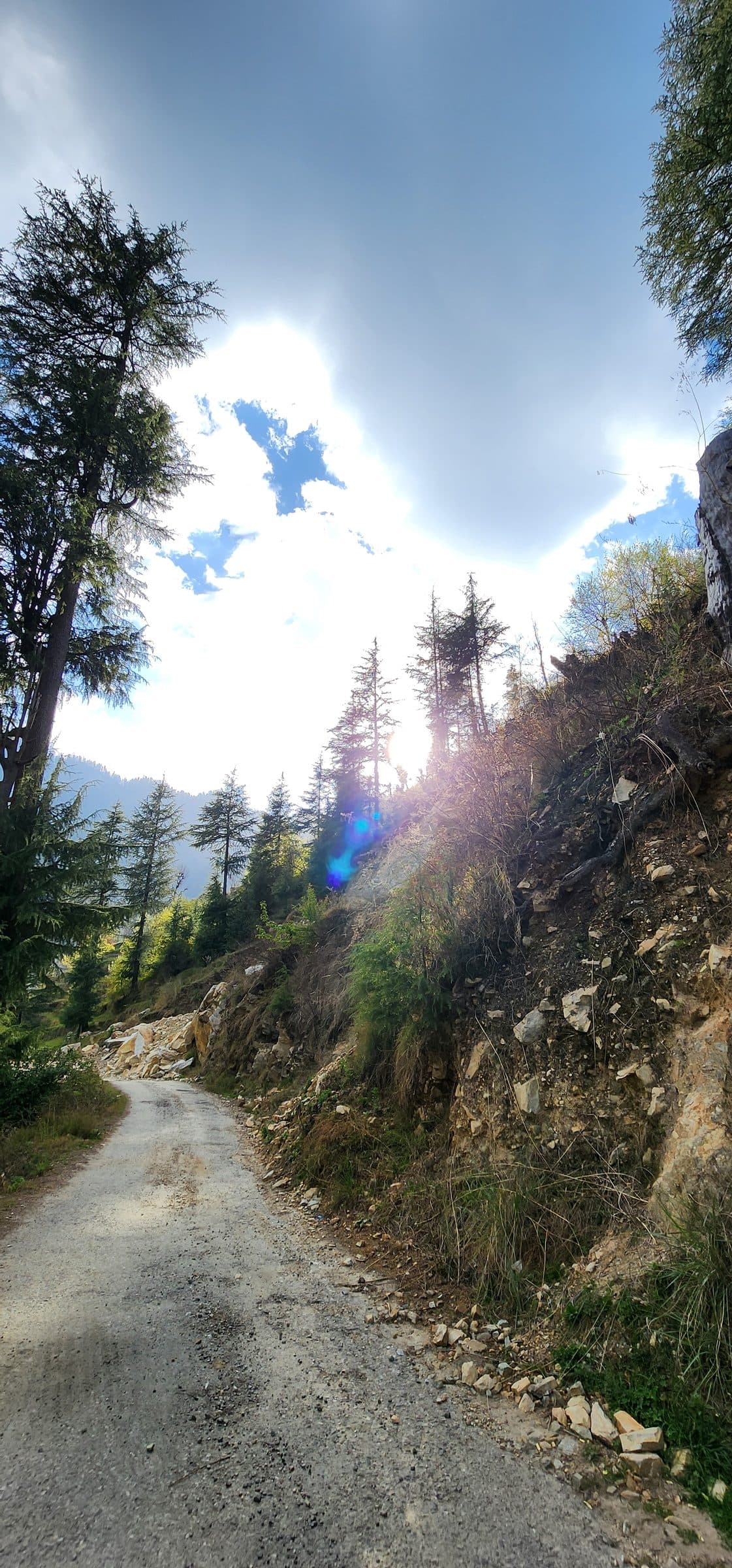
A dirt road winds through lush green, hilly terrain in the Jibhi Valley.
Where to Stay: Trekking Bases with Local Soul
Jibhi’s homestays and guesthouses are family-run wooden marvels, many with balconies overlooking the Tirthan River. For a curated experience, Ailyak Cafe & Stays offers private cottages, wood-fired dinners, and guides who know every hidden trail. Nearby Shoja village offers rustic lodges like Shoja Sojourn with hot tubs to soothe tired trekking muscles. For budget trekkers, family-run guesthouses in Banjar (10 km from Jibhi) provide clean rooms and hearty Himachali meals.
Cuisine tip: Try thukpa and siddu at local dhabas or pair your trek with Traditional Himachali Cuisine in Jibhi.
Packing List for Offbeat Treks in Jibhi
- Waterproof trekking shoes with ankle support (trails can be rocky and muddy)
- Layered clothing for 10–25°C swings (fleece, rain jacket, sun hat)
- Trekking poles for steep descents (especially Raghupur and Shoja Ridge)
- Cash (no ATMs in Jibhi; nearest at Banjar)
- Permits for trout fishing (if you plan to cast a line in the Tirthan)
- Reusable water bottle and snacks (few shops on remote trails)
Jibhi Tirthan Valley Trekking FAQs
Is Jibhi safe for solo female trekkers? Yes. Jibhi is a quiet village with strong community ties. Stick to marked trails, register your trek with your homestay, and local guides are happy to accompany women trekkers.
Do I need permits for treks in Jibhi? No special permits are needed for Chehni Kothi, forest walks, or Shoja Ridge. For Serolsar Lake and Raghupur Fort, no permits are required either—just enjoy the trails. Trout fishing requires a permit from the Fisheries Department at Larji or Banjar.
Can I trek in July–August? July–August is monsoon season. Trails can be slippery and river crossings risky. If you trek, choose lower-altitude loops like the Tirthan Riverside Walk and carry rain gear. Most trekkers prefer September–October for clear skies.
What’s the best base for multi-day treks? Stay in Jibhi or Shoja for proximity to trails. Jibhi’s Ailyak Cafe & Stays is ideal for morning departures, while Shoja’s lodges like Shoja Sojourn offer post-trek relaxation.
How difficult are these treks? All listed treks are easy to moderate. Chehni Kothi and forest walks are beginner-friendly. Serolsar Lake and Raghupur Fort require fitness for 300–350m elevation gains. Shoja Ridge is the longest but rewards with panoramic views.
Jibhi Trip Essentials
For planning routes, timing, and live conditions, use the core Jibhi guides:
How to Explore Offbeat Trekking Trails in Jibhi Tirthan Valley
Discover secluded Himalayan treks in Jibhi Tirthan Valley, from ancient towers to serene mountain lakes.
Total Time: 1 hour
1
Start at Chainsi Marg Road-Head
Begin your trek at the Chainsi Marg road-head, located 7 km from Jibhi village, to access the Chehni Kothi trail.
2
Hike to Chehni Kothi
Walk 2.5 km round trip uphill through terraced apple orchards and oak glades, gaining 200m in elevation over 45 minutes.
3
Visit the Ancient Tower
Reach the 9-storey Chehni Kothi, a 500–700-year-old stone-and-wood tower, and explore its earthquake-resistant architecture and historical significance.
4
Return to Trailhead
Retrace your path back to Chainsi Marg, ideally during the best trekking seasons of March–June or September–November.
Frequently Asked Questions
Jibhi is located in the Tirthan Valley in the Kullu District of Himachal Pradesh, at an altitude of 2250 meters. It lies along the Tirthan River and serves as a gateway to Jalori Pass and the Great Himalayan National Park.
The best time to visit Jibhi is from March to April, when the weather is mild, apple blossoms are in full bloom, and the trails are dry. Spring brings clear roads and pleasant conditions ideal for exploring the valley.
Yes, Jibhi is safe to visit in April 2026. The region is peaceful with stable weather, well-maintained infrastructure, and accessible roads, making it an ideal time for travelers.
Yes, you can visit Jibhi in January. While Jalori Pass remains closed due to snowfall, the village is accessible and offers a quiet, snow-covered retreat with warm accommodations available.
Mobile networks from BSNL and Airtel are functional in Jibhi, but Jio connectivity is patchy. There is no ATM in Jibhi, so travelers should carry cash from Banjar, which is 10 km away.
Top activities in Jibhi include walking along the Tirthan River, visiting the historic Chehni Kothi tower, and driving to Jalori Pass when open. It's a destination focused on tranquility, nature immersion, and experiencing slow mountain life.
Related reads
- Jibhi Reimagined: A Slow Journey Through the Heart of Tirthan Valley
Jibhi Tirthan Valley tour package guide: best time, places to visit, safety, and how to plan your trip. Discover Jibhi Himachal Pradesh with verified local insights.
- Jibhi: Where the Mountains Whisper the Art of Slowing Down
Jibhi in which state? Himachal Pradesh. Discover Jibhi Valley’s best-kept secrets — from Jalori Pass to ailyak living — with essential travel tips for 2026.
- Where the Mountains Whisper: A True Escape to Jibhi Tirthan Valley
Nestled in Himachal Pradesh, Jibhi Tirthan Valley is a serene mountain sanctuary where time stands still. Discover untouched beauty, whispering deodars, and soul-soothing escapes in this hidden Himalayan gem.
- Famous Cafes in Jibhi: Where Mountain Coffee Meets the Ailyak Way
Discover the most famous cafes in Jibhi, where mountain air meets slow sips and the serene way of life unfolds with every brew.
- The Quiet Magic of Jibhi: Why This Himalayan Valley Is Calling You Now
Delhi to Jibhi train not available. Nearest railhead Jogindernagar. Best routes, weather, and places to visit in Jibhi Himachal Pradesh. Safe to visit now?
- Where the Mountains Whisper: Discovering Jibhi, Himachal’s Hidden Valley of Stillness
Jibhi in which state? Discover Jibhi, Himachal Pradesh—its weather, best time to visit, top places, and how to experience the valley’s slow-living essence.
Stay Updated
Subscribe to our newsletter for travel tips and updates about Jibhi.